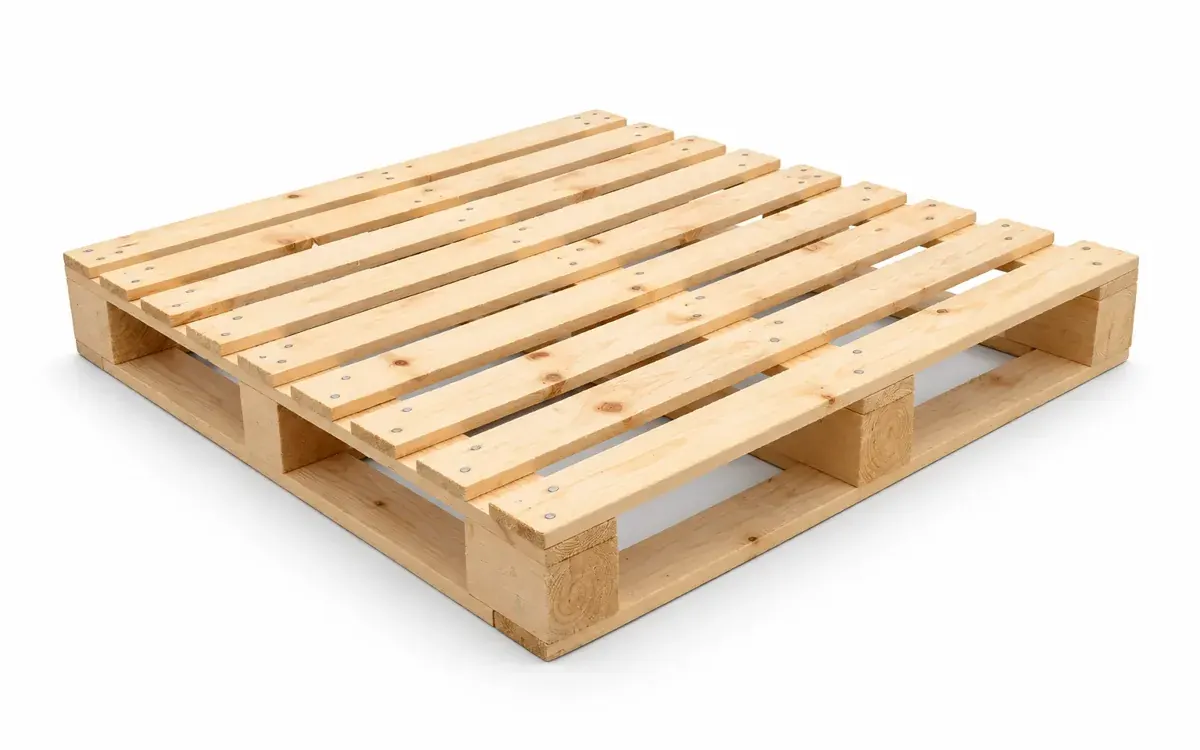
Perimeter base pallets (1200 x 1000)
1200 x 1000 mm
Perimeter base pallets sit flush on the beams, with bottom boards round all four sides, new in light, medium or heavy duty, or used in Grade A or Grade B.
- Four-way
- BS EN 13698-2 build
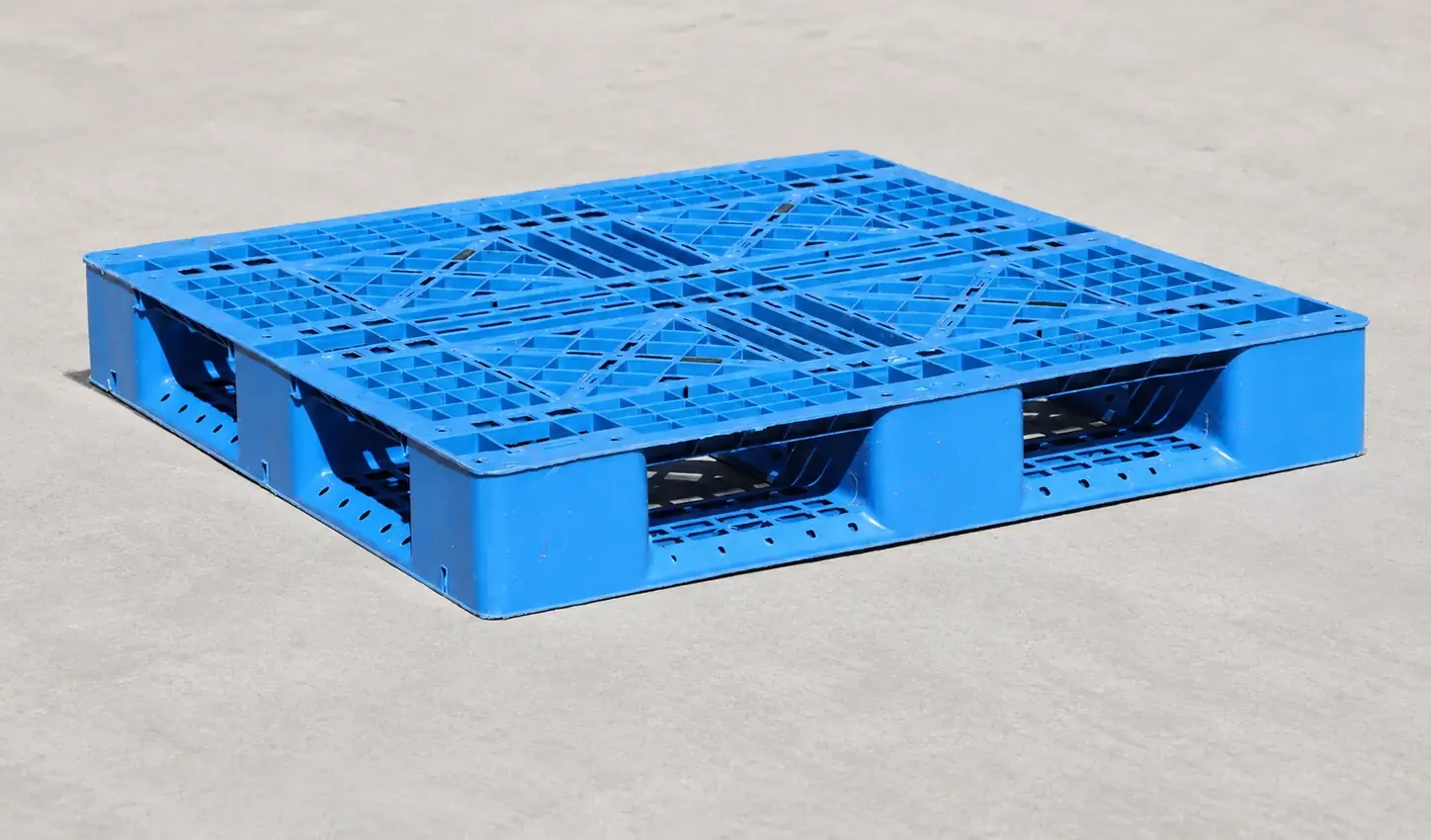
We sell rackable pallets in two kinds, perimeter base wooden pallets and rackable plastic pallets, new or used. The wooden range runs from the 1200 x 1000 mm UK standard to the CP6 to CP9 chemical sizes, the plastic range stands on runners or a full perimeter base, and we deliver across the UK, priced to your postcode.
Every quote names the build, and for plastic the model and the racking load its maker publishes for it.
A pallet is rackable when its blocks or runners rest on the front and rear racking beams, according to SEMA, so the beams carry the pallet and not its bottom boards in bending. Two builds meet that, a perimeter base wooden pallet, which sits flush with bottom boards on all four sides according to Dexion, and a plastic pallet whose maker publishes a racking load for the model.
| Pallet | Base | Entry | On beam racking |
|---|---|---|---|
| Perimeter base pallet, 1200 x 1000 mm | Bottom boards on all four sides, flush | Four-way | Suits racking best (Dexion) |
| CP6 to CP9 pallets | Perimeter base | Four-way | Suits racking as a perimeter base |
| Rackable plastic pallet | Runners or a full perimeter base | Named on the quote | Racking load published per model |
| Euro pallet, 1200 x 800 mm | Three bottom boards along the 1200 mm length | Four-way | With the 800 mm face to the aisle (SEMA) |
| CP1 to CP5 pallets | Three bottom boards running one way | Four-way | With the bottom boards running front to back |
| Three-legger pallet | Three runners, no bottom boards | Two-way | Not offered for racking |
| Converted pallet | A three-legger with added bottom boards, not flush | Four-way | Less suited as it is not flush (Dexion) |
| Nestable plastic pallet | Nine feet | Named on the quote | No racking figure from its maker |
We sell perimeter base wooden pallets made for racking, new or used, in the 1200 x 1000 mm UK standard perimeter base pallet and the CP6, CP7, CP8 and CP9 chemical pallets.
1200 x 1000 mm
Perimeter base pallets sit flush on the beams, with bottom boards round all four sides, new in light, medium or heavy duty, or used in Grade A or Grade B.
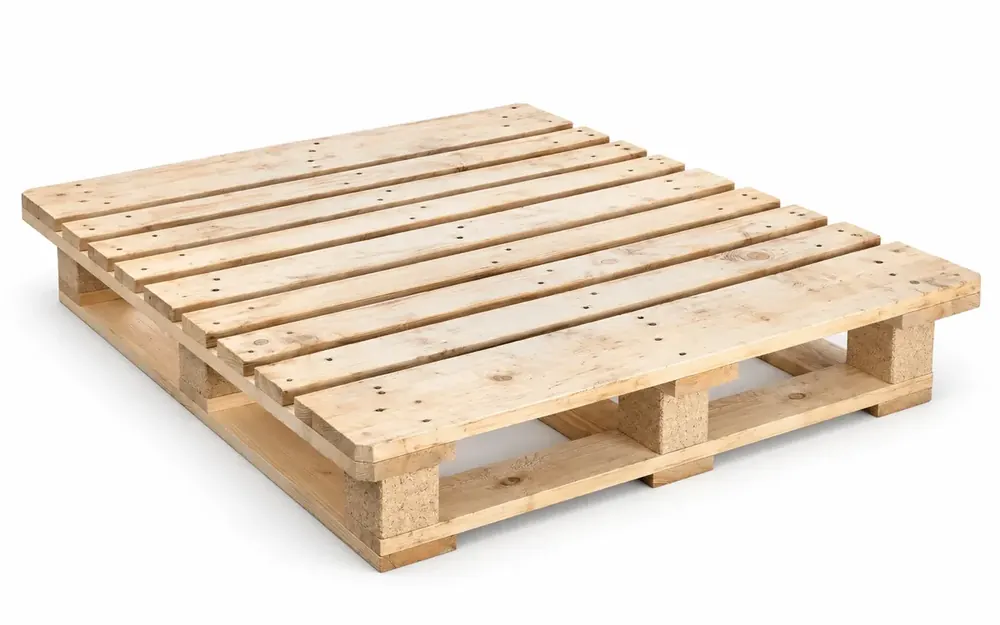
1200 x 1000 x 156 mm
CP6 pallets carry bagged bulk materials on a perimeter base of 20 boards and 9 blocks.
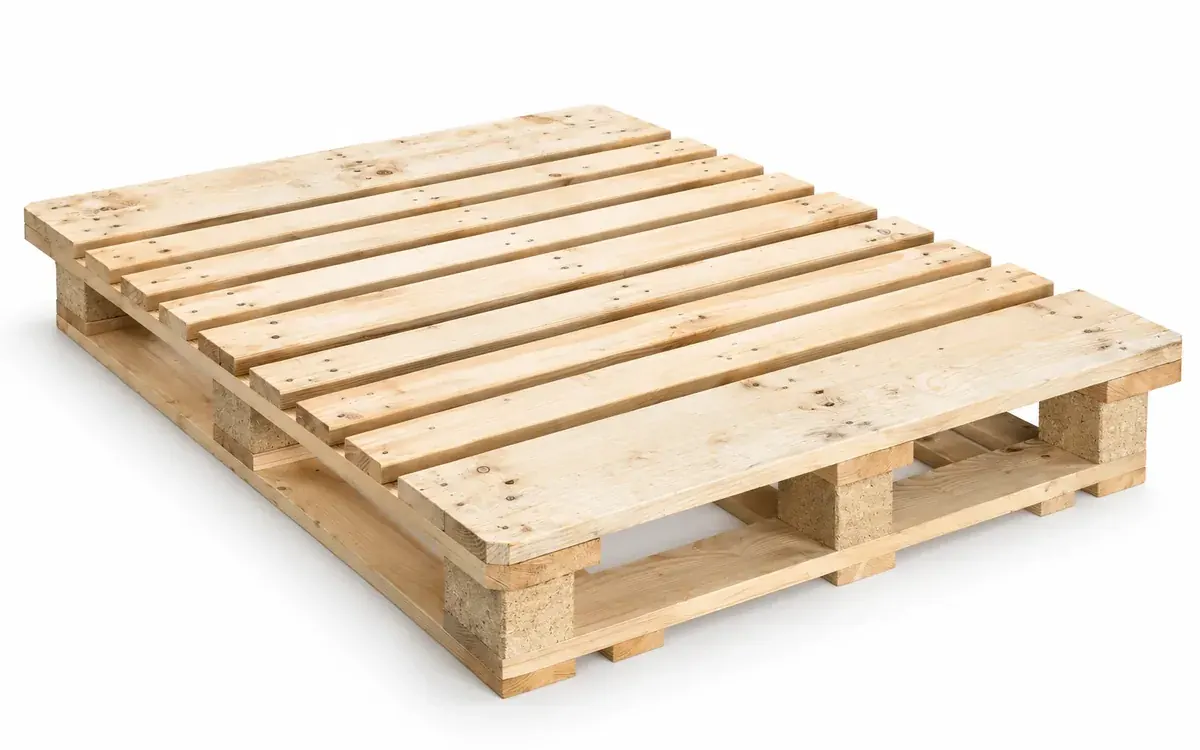
1300 x 1100 x 156 mm
CP7 pallets carry bagged bulk materials on a perimeter base of 22 boards and 9 blocks.
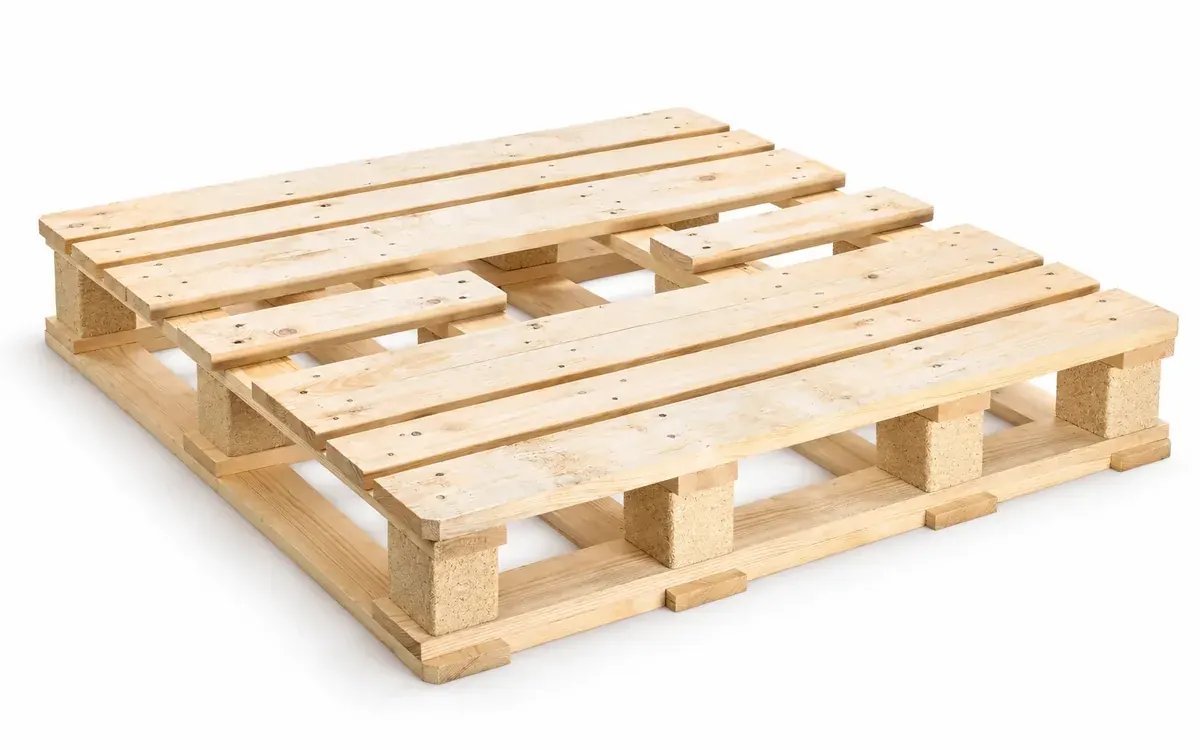
1140 x 1140 x 156 mm
CP8 pallets carry large containers with a bottom outlet, on a perimeter base with an open centre.
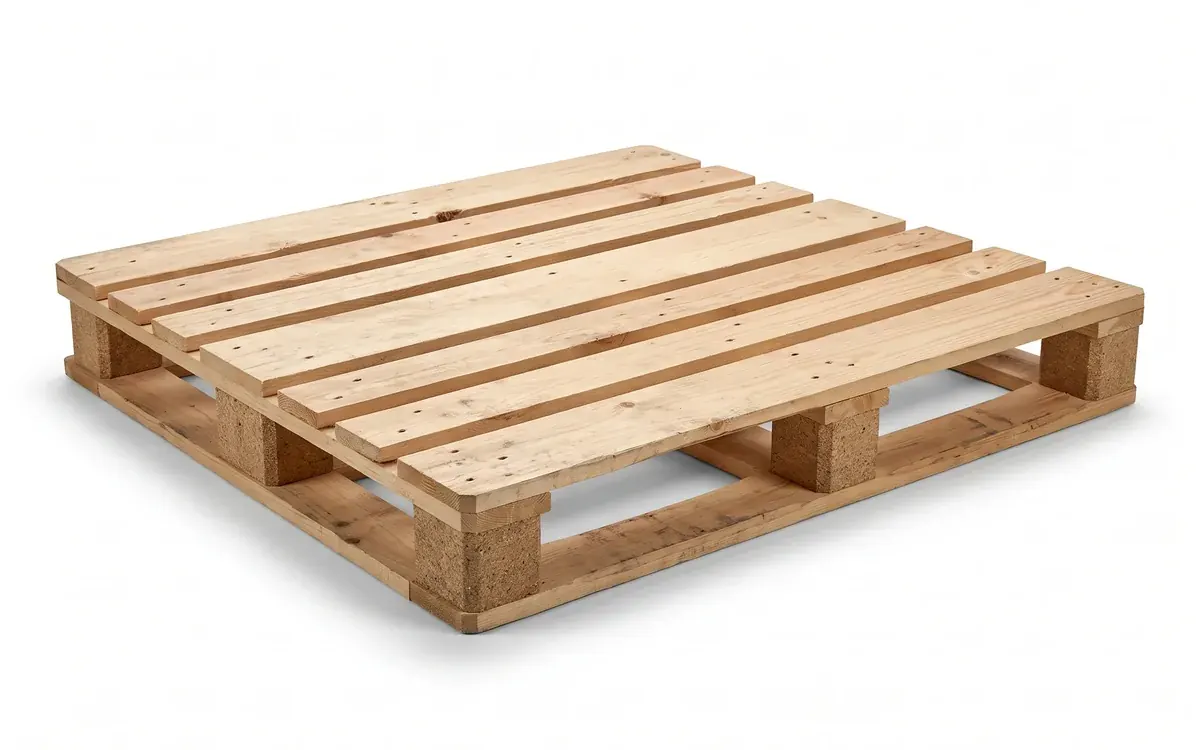
1140 x 1140 x 156 mm
CP9 pallets carry casks and FIBCs (flexible intermediate bulk containers) on a perimeter base of 24 boards and 9 blocks.
All four builds of the 1200 x 1000 mm size are compared on our UK standard pallets page, and all nine CP types, including the five on three bottom boards, are on our CP pallets page.
We sell rackable plastic pallets in heavy duty models on runners or a full perimeter base, and hygienic models with a closed deck on runners. Each model we offer for racking comes with the racking load its maker publishes.
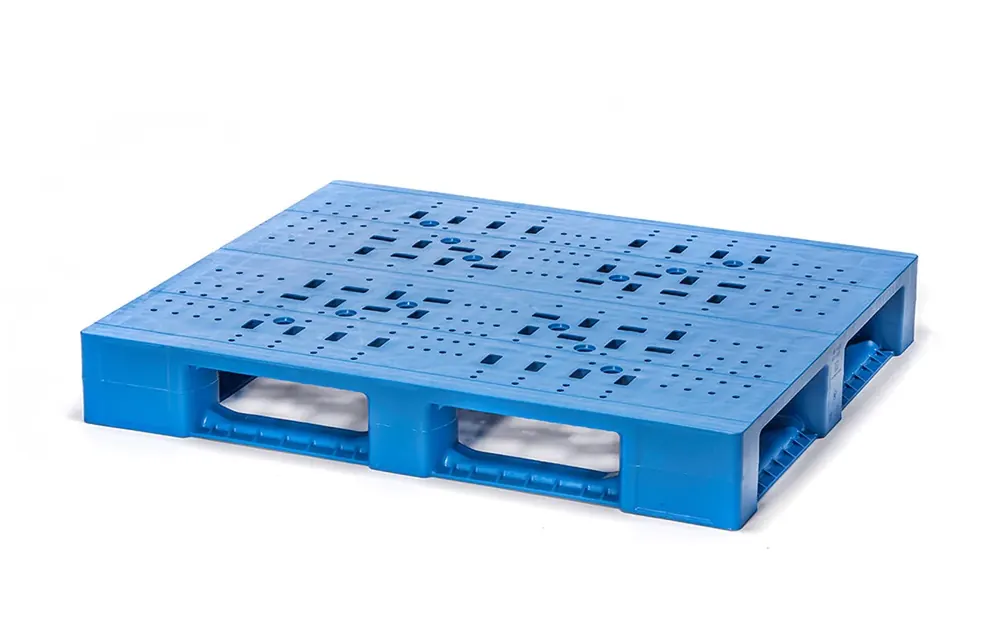
1200 x 1000 and 1200 x 800 mm
Heavy duty plastic pallets stand on three runners, five runners or a full perimeter base, and some carry a steel insert for beam racking.
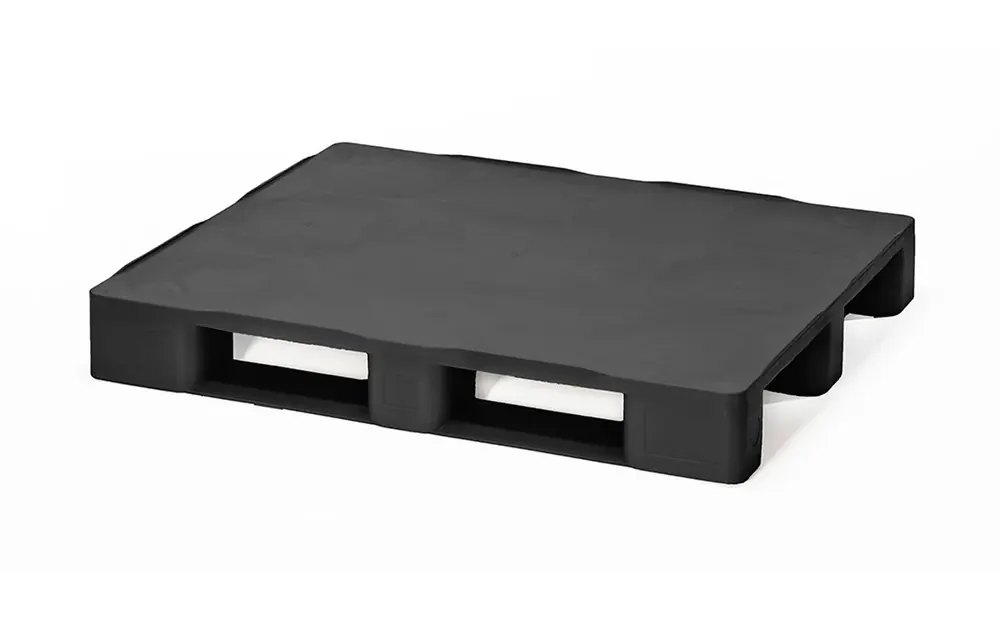
1200 x 1000 and 1200 x 800 mm
Hygienic plastic pallets on runners have a smooth, closed deck for food and pharma stores, and some three-runner models carry a published racking load, named on the quote.
Rackable models also come in the 1200 x 800 mm size on our plastic euro pallets page and second hand on our used plastic pallets page, and every style is compared on our plastic pallets page.
A pallet sits on racking beams with its corner blocks resting on the front and rear beams and an equal overhang of about 50 mm over each, according to SEMA, the Storage Equipment Manufacturers' Association. SEMA cites BS EN 15635 for the general 50 mm overhang, and gives 100 mm as the clearance between pallets stored back to back.
| Pallet | Face to the aisle | Why |
|---|---|---|
| Perimeter base pallet | Either face | Bottom boards run round all four sides, so boards span the beams both ways |
| Euro pallet, 1200 x 800 mm | The 800 mm face | Its bottom boards then span the beams; with the 1200 mm face to the aisle no bottom board spans them (SEMA) |
| CP1 to CP5 pallets | The face that leaves the three bottom boards running front to back | The boards then span the beams |
| Rackable plastic pallet | As its maker rates it for racking | The racking load is published for the model |
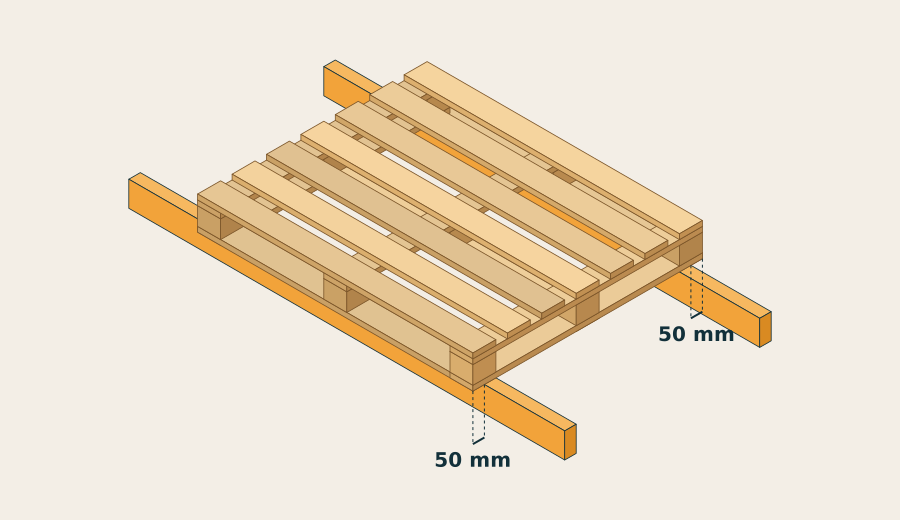
Where the pallet and the racking depth do not match, SEMA names pallet support bars under the bottom boards, or decking on the beams, as options.
SEMA gives three Euro pallets on a 2700 mm beam as a common layout. Send the racking frame depth and beam length with your quote request, and we match the pallet to them.
No racking load is published for wooden Euro, UK standard or CP pallets, while rackable plastic models publish one per model.
The racking itself carries its own rated load, set by its maker.
We sell rackable pallets new or used in every build except hygienic plastic, which we sell new, and used UK standard perimeter base pallets are inspected and graded before dispatch.
| Pallet | New | Used |
|---|---|---|
| Perimeter base pallets | New in light, medium or heavy duty | Used in Grade A or B, graded |
| CP6 to CP9 pallets | New, built to the CP dimensions | Used, checked for type and condition before supply |
| Heavy duty plastic pallets | New | Used |
| Hygienic plastic pallets | New | Not offered used |
A fresh perimeter base build in light, medium or heavy duty is set out on our new pallets page.
We supply perimeter base and CP pallets heat treated and ISPM 15 marked on request, and rackable plastic pallets need no treatment. Plastic pallets fall outside ISPM 15, according to GOV.UK, because its rules cover wood packaging material.
Which loads need the mark, route by route, is set out on our heat treated pallets page.
We deliver rackable pallets to any UK site a lorry can reach, priced by postcode, with no minimum order, and stock sizes usually arrive within 3 working days.
The price of a rackable pallet follows the material and build, new or used, the duty level or model, the number of pallets, heat treatment and the delivery distance.
Does a used rackable pallet cost less? Yes. A used pallet costs less than a new one of the same build, and a heavy duty build costs more than a light one.
A rackable pallet quote gives one figure for the pallets and the delivery. Tell us the pallet, the size, new or used, how many and your racking details.
A non-rackable pallet does the job for loads kept on the floor, block-stacked or sent one way, where no beam has to carry the pallet.
| Pallet | On racking | What it does well |
|---|---|---|
| Three-legger pallet | Three runners and no bottom boards (Dexion), so not offered for racking | Two-way handling and floor storage, a light build with less timber than a perimeter base |
| Converted pallet | Added bottom boards leave it raised, not flush, so it suits racking less (Dexion) | Four-way handling on the floor |
| Nestable plastic pallet | No racking figure from its maker | One-way export and returning empties, nested to save space |
Floor builds in wood have their own pages for three-legger pallets and converted pallets, and the nesting build in plastic is on our nestable plastic pallets page.
A solid top rackable pallet has a closed, unbroken deck on a base made for racking, either a closed-deck plastic pallet on runners or a close-boarded wooden pallet on a perimeter base.
A full perimeter pallet has bottom boards running round all four sides of its base, so it sits flush, takes forks from all four sides and suits racking best, according to Dexion.
Plastic pallets on runners are rackable when their maker publishes a racking load for the model. Wooden three-runner pallets have no bottom boards across the runners, and we supply perimeter base builds for racking.
No. We sell the pallets that go on racking, not the racking itself. Tell us the frame depth and beam length, and we match the pallet to them.
Send the pallet, size and postcode, then request a quote.