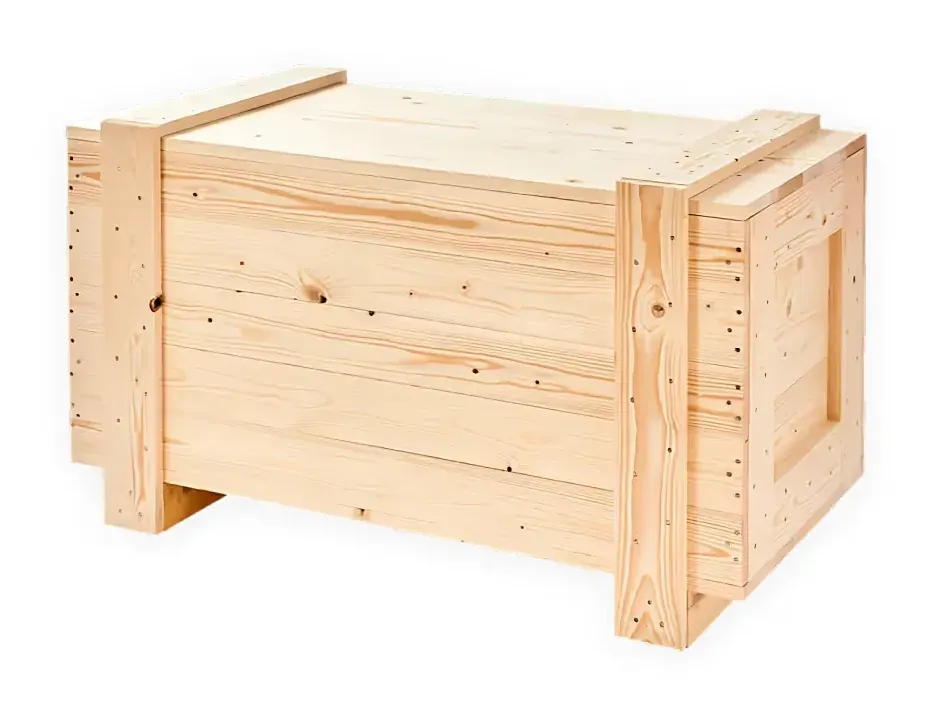
Closed timber packing cases
Boarded on every side
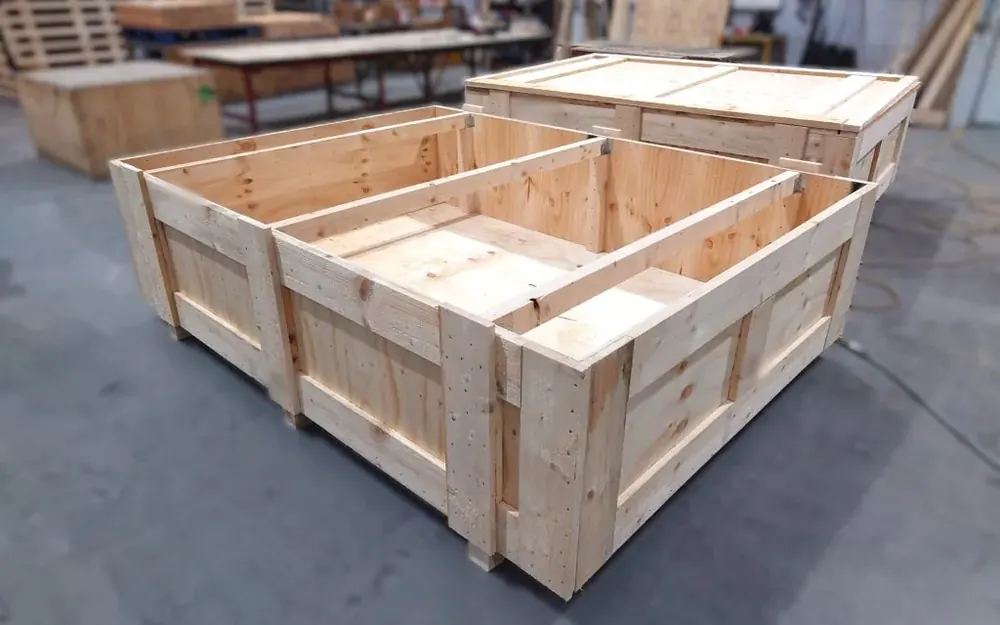
Closed timber packing cases enclose heavy machinery and parts on all six sides, with a lid fixed down for transit.
- Softwood boards
- Lid and skids
We supply closed timber cases, open slatted crates, plywood cases and collapsible plywood crates built to your goods' dimensions, on skids or a pallet base, ISPM 15 marked when the load leaves Great Britain, delivered across the UK and priced to your postcode.
Every quote names the build, the internal and external size and the base, with linings and foam added when the goods need them. Tell us the weight of the goods in kg when you ask.
A wooden crate has gaps between its boards or only a frame, while a packing case is closed on every side, so the case keeps out dust, rain and handling damage that a crate lets through.
We supply the open and closed classes in four builds.
We supply four types of wooden crate and packing case, each built to order for your goods.
Four builds cover the range, from the closed timber case to the collapsible plywood crate.
Boarded on every side
Closed timber packing cases enclose heavy machinery and parts on all six sides, with a lid fixed down for transit.
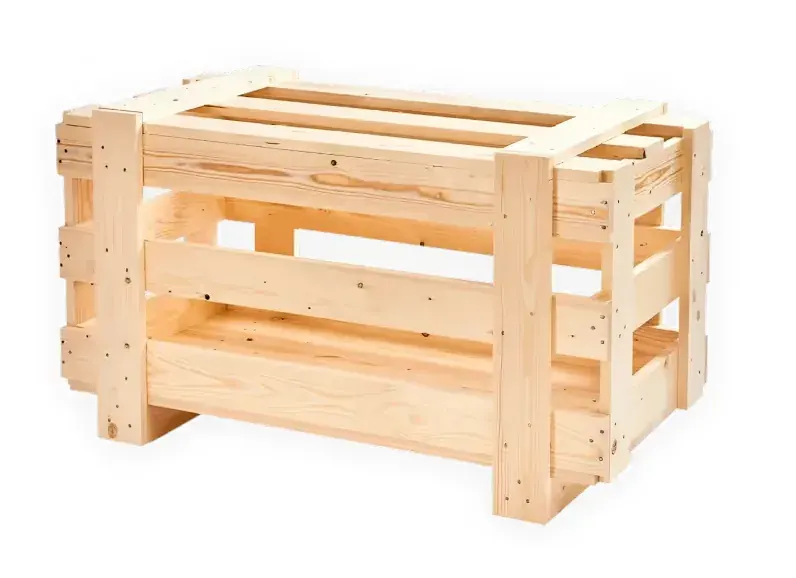
Gaps between the boards
Open slatted wooden crates hold goods that need air or a visible check, using less timber than a closed case.
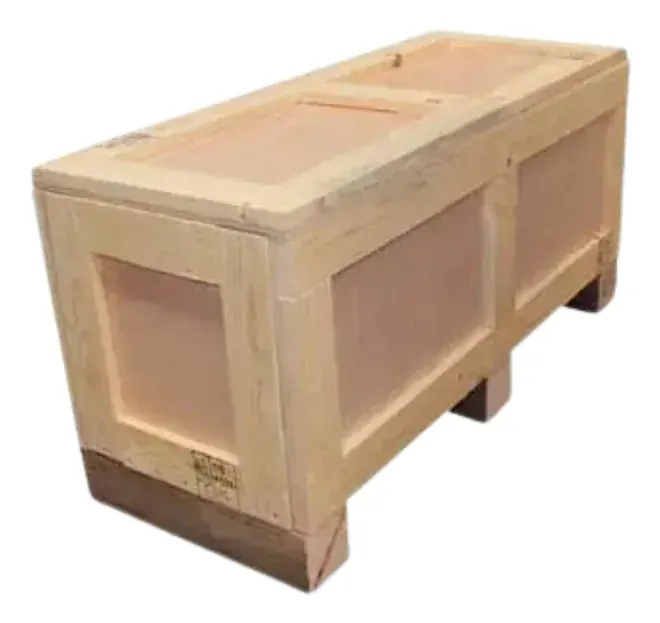
Plywood panels on a batten frame
Plywood packing cases pair flat plywood panels with timber battens, for a closed case lighter than all-board construction.
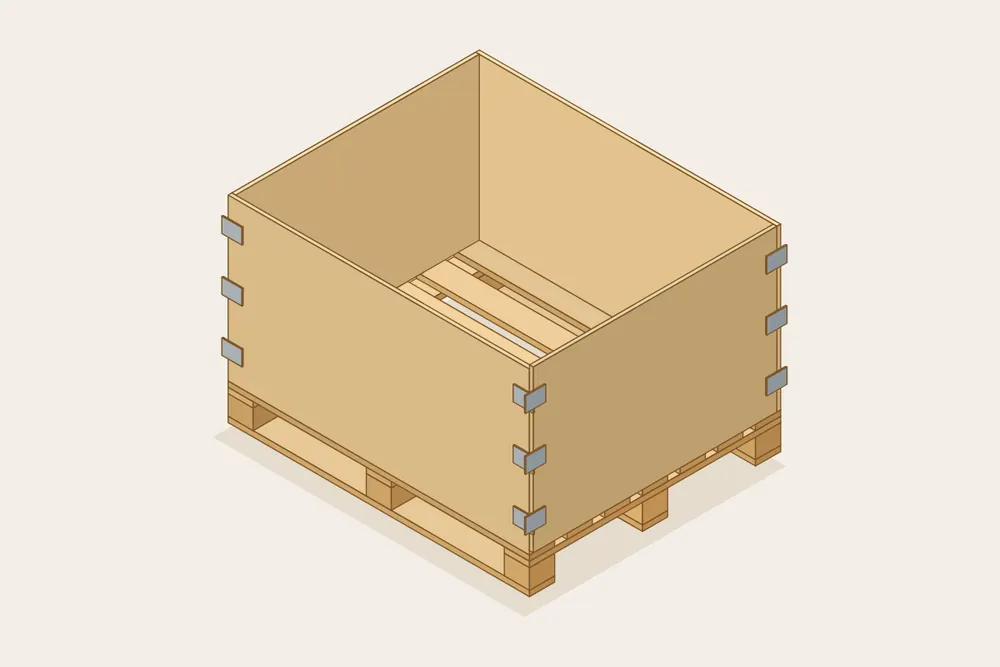
Folds flat between trips
Collapsible plywood crates arrive flat and fold up on site, then fold down again for return or storage.
Large wooden crates are built to the internal size of your goods, with no fixed standard sizes, and the external size follows from the build, the base and the timber.
No. Crate makers build to the load, so every quote starts from the goods' length, width and height.
Crates far larger than a pallet sit on long skids; a load that only needs a bigger base than standard is better on a large pallet. If the crate leaves Great Britain, the timber in it has to be treated as well.
Export crates need the same ISPM 15 heat treatment and mark as pallets, because GOV.UK lists packing cases and crates as wood packaging material. The rule applies to goods moved from Great Britain to the EU and to Northern Ireland, and to any other country whose rules ask for it.
| Part of the crate | Covered by ISPM 15? | Why |
|---|---|---|
| Solid timber boards, battens and skids | Yes | Solid wood packaging, according to GOV.UK |
| Plywood and OSB panels | No | Processed wood, exempt according to GOV.UK |
| Timber 6 mm thick or less | No | Exempt according to GOV.UK |
A plywood case on solid timber battens or skids still needs the mark, because those solid parts are covered. What the standard exempts, and how the four-part stamp reads, is in ISPM 15 explained.
Only a registered member of the UK Wood Packaging Material Marking Programme can apply the ISPM 15 mark in Great Britain, according to GOV.UK, so every export crate is quoted heat treated and marked. The same treatment and stamp on the pallets under your goods are set out on our heat treated pallets page. An unmarked crate can be rejected or destroyed at the border, according to GOV.UK.
Goods are packed inside a wooden packing case with a lining against moisture, desiccant to absorb what gets in, and foam or timber bracing to stop them moving.
Wooden crates stand on timber skids or on a pallet base, so a forklift or pallet truck can lift them without touching the goods.
| Base | How it is lifted | Suits |
|---|---|---|
| Timber skids | Forklift from the two open ends | Long and heavy crates |
| Pallet base | Forklift or pallet truck, two or four ways, as the pallet allows | Crates sized to a 1200 x 1000 or 1200 x 800 mm footprint |
A base wider or longer than a standard pallet is built to the crate, in the same way as our bespoke pallets.
We deliver wooden crates assembled, or flat packed to cut the delivery cost, to sites across England, Scotland, Wales and Northern Ireland.
The price of a wooden crate follows the build, the size, the weight of the goods, export treatment, the packing inside and the delivery distance.
Send those six and one quote covers the crates and the delivery.
A wooden crate quote covers the crates and delivery in one figure. Tell us the build, the goods' size and weight, whether the crate leaves Great Britain and your postcode.
A wooden pallet box or a collared pallet does the job for loose goods stored or moved on one footprint, again and again, where a crate is built once around one load.
| Feature | Wooden pallet box | Collared pallet |
|---|---|---|
| Build | Fixed timber sides on a pallet base | Hinged collars stacked on a pallet |
| Height | Fixed | Set by the number of collars |
| Reuse | Rigid, for repeated trips | Folds flat when empty |
Timber box pallets with fixed sides are on our wooden pallet boxes page. Hinged collars in three sizes, with lids, are on our pallet collars page. Plastic, folding and cardboard boxes sit with them under pallet boxes.
We deliver large wooden crates to any UK site a lorry can reach, built to your goods. Send the size, the weight and your postcode.
No for the plywood panels, yes for the solid timber battens and skids on the same crate. GOV.UK exempts plywood panels, and the solid parts need the mark for export.
No. We supply new crates built to order, because each crate is sized to one load. A used crate rarely fits another load's size.
Yes, hinged pallet collars stacked on a pallet make an open-top crate, with a lid to close it. A closed packing case on a pallet base is the alternative.
Send the build, the size and the postcode, then request a quote.